Skin & longevity · Skin
Youthful skin: how red light therapy rebuilds collagen and elastin
Ageing skin is not short of instructions. It is short of energy, and of the fibroblasts willing to spend it.
12 August 2026 · 12 min read
Key takeaways
- Collagen I and III decline roughly 1% per year from the mid-twenties, accelerating after menopause.
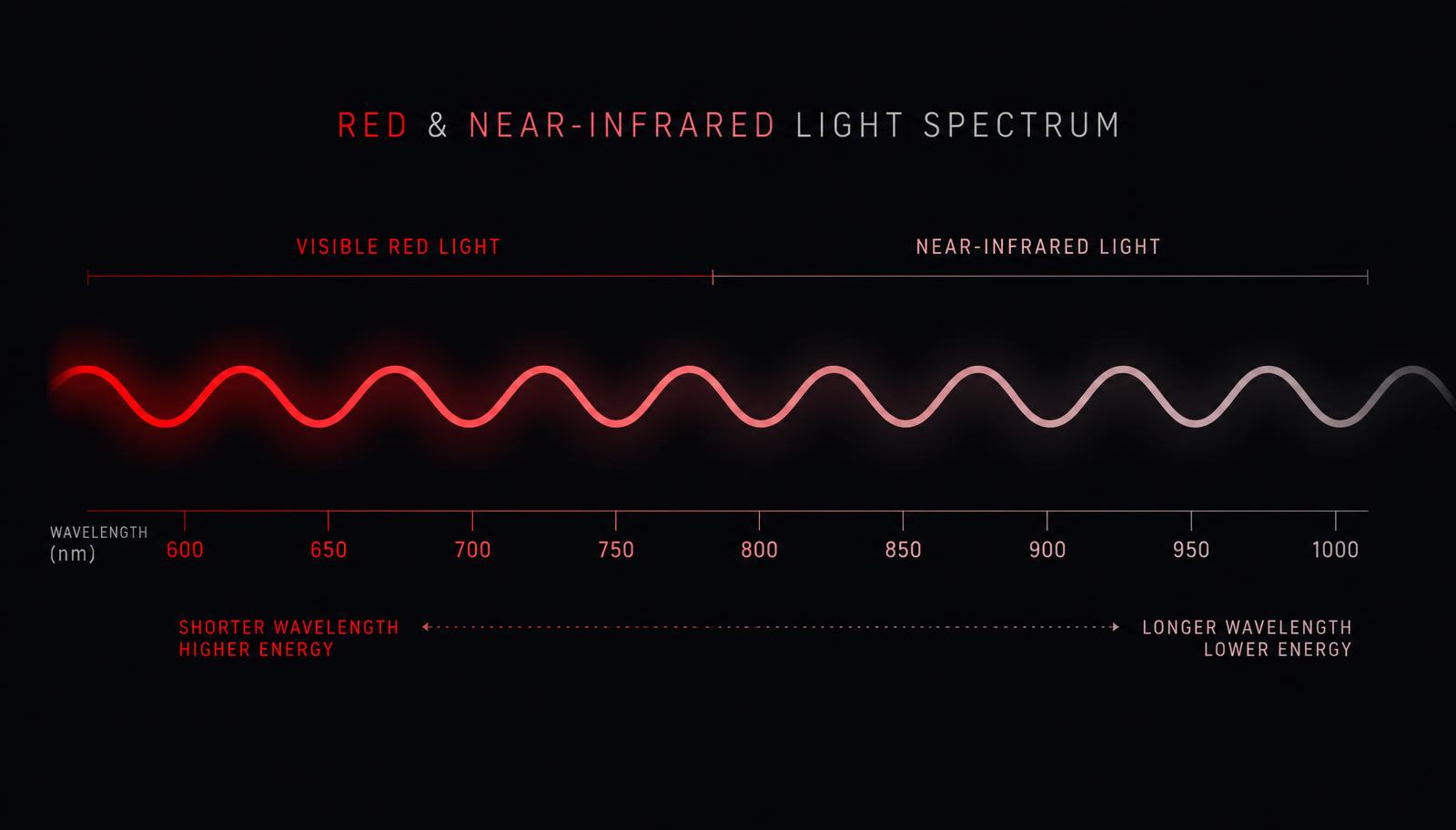
- Red light at 630–660 nm reaches dermal fibroblasts and increases their ATP availability.
- Studies report measurable gains in collagen density, elasticity and roughness after 8–12 weeks.
- Red light stacks well with retinoids, peptides and vitamin C — and unlike them, causes no barrier stress.
- 10 minutes daily at 20–30 cm beats 40 minutes twice a week.
What actually happens when skin ages
Skin ageing is the sum of two processes. Intrinsic ageing is genetically programmed: fibroblast activity slows, the dermal extracellular matrix thins, cell turnover lengthens and the dermo-epidermal junction flattens. Extrinsic ageing — photoageing, pollution, glycation, smoking, sleep debt — accelerates all of it.
In both cases the visible signs trace back to the dermis, not the surface. Collagen I provides tensile strength, collagen III provides pliability, elastin provides recoil, and hyaluronic acid provides volume and hydration. Every one of these is manufactured by fibroblasts, and every one is metabolically expensive. Collagen synthesis in particular requires large amounts of ATP, vitamin C as a cofactor, and a favourable balance between production and matrix metalloproteinase-driven degradation.
≈1%
Annual collagen loss from the mid-twenties
30%
Typical dermal collagen lost in the 5 years after menopause
8–12 wk
Time for remodelling to become visible
The mechanism: energy, signalling, remodelling
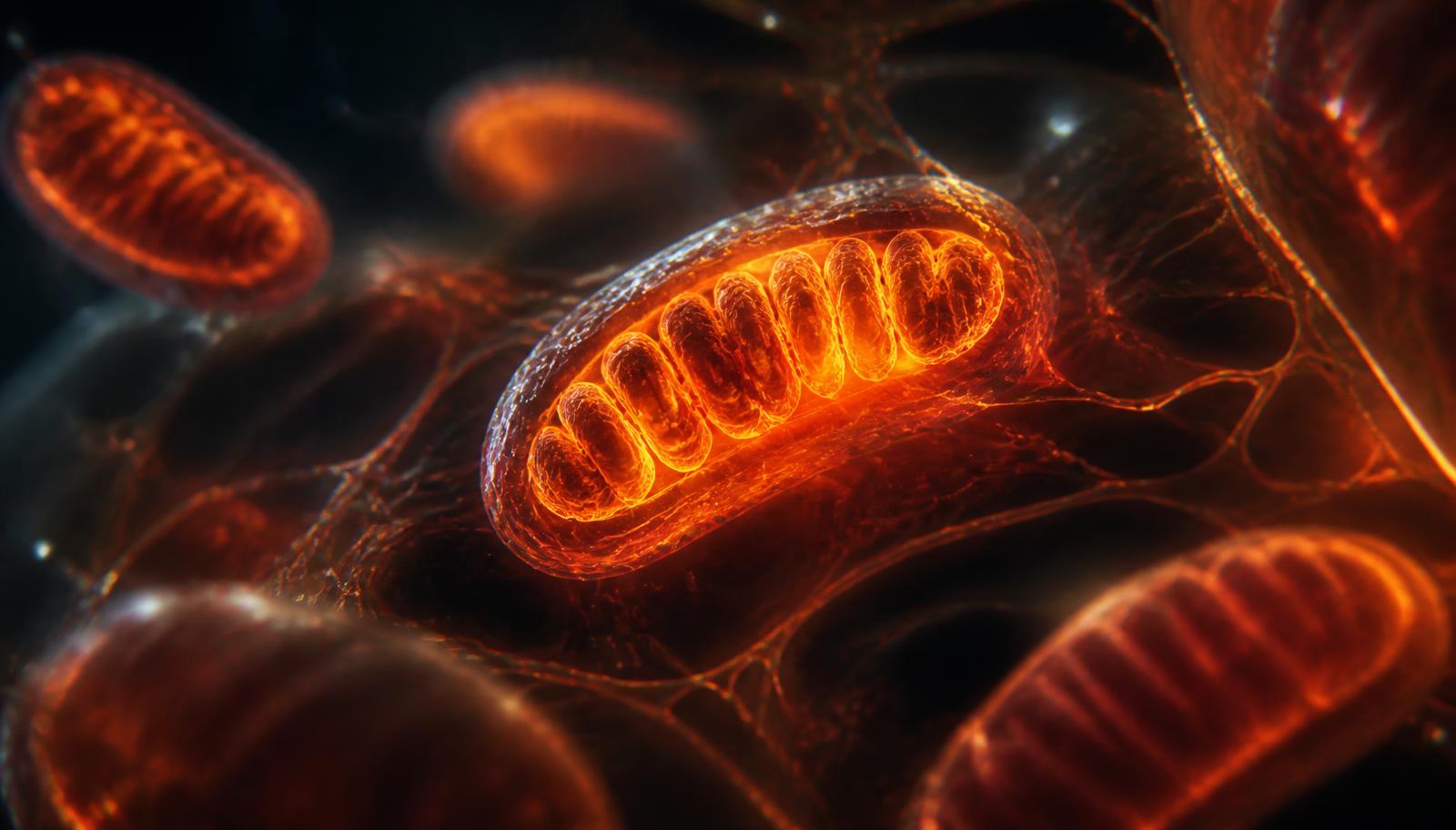
Red light around 660 nm penetrates one to five millimetres — precisely the depth of the papillary and upper reticular dermis where fibroblasts live. Those photons are absorbed by cytochrome c oxidase in fibroblast mitochondria, lifting ATP output and releasing nitric oxide into the surrounding microvasculature.
- ATP availability rises, removing the energetic ceiling on protein synthesis.
- A transient ROS signal activates redox-sensitive transcription factors including Nrf2 and AP-1.
- Procollagen I and III gene expression increases; fibroblast proliferation and migration improve.
- TGF-β signalling shifts towards synthesis, while excess MMP-1 activity is moderated.
- Improved perfusion delivers oxygen, amino acids and vitamin C to the synthesis site.
Crucially, this is a non-ablative pathway. Lasers and peels create controlled injury and let the wound-healing cascade rebuild the tissue. Photobiomodulation skips the injury and addresses the synthesis step directly. That is why there is no downtime, no peeling and no post-inflammatory hyperpigmentation risk — and also why it is slower and more cumulative than resurfacing.
What the evidence actually shows
Controlled trials of red and near-infrared LED treatment for skin rejuvenation have reported improvements in intradermal collagen density measured by ultrasonography, better skin elasticity on cutometry, reduced roughness on profilometry and high participant satisfaction, typically after 20 to 30 sessions over 10 to 15 weeks.
- Collagen density: consistent increases versus untreated controls in split-face and randomised designs.
- Elasticity: measurable gains, most pronounced in participants with visible laxity at baseline.
- Fine lines: modest but reproducible reductions in periorbital wrinkle depth.
- Tone and redness: improvement in diffuse erythema, likely via microcirculation and inflammation modulation.
- Safety: no serious adverse events reported across LED rejuvenation trials; the main caution is eye protection.
The honest summary: red light is not a facelift and does not pretend to be. It is a low-effort, low-risk intervention that measurably shifts the collagen balance in your favour when used consistently.
A 12-week protocol that actually works
| Phase | Weeks | Session | Frequency |
|---|---|---|---|
| Adaptation | 1–2 | 6–8 min | 5× per week |
| Build | 3–8 | 10 min | 6–7× per week |
| Maintain | 9–12+ | 10 min | 4–5× per week |
- Cleanse first. Makeup, mineral sunscreen and heavy occlusives block and scatter light.
- Apply actives after, not before — light penetration is best on bare skin.
- Keep 20–30 cm from a panel, or wear a mask at its designed distance.
- Close your eyes or use the supplied goggles. Comfort matters more than risk at these intensities, but do it anyway.
- Do not skip the neck, décolleté and backs of the hands. They age faster and are treated less.
Stacking with skincare
Red light pairs particularly well with vitamin C (a collagen cofactor) in the morning and a retinoid at night. Because it does not compromise the barrier, it can be used alongside actives that would clash with resurfacing treatments.
What to expect, week by week
- Weeks 1–2: transient post-session flush, better hydration, skin feels calmer. Nothing structural yet.
- Weeks 3–5: tone starts to even out; redness and blotchiness soften. Makeup sits differently.
- Weeks 6–8: the first firmness changes — usually along the jawline and under the eyes.
- Weeks 9–12: fine line depth and overall texture improve as new collagen matures and cross-links.
- Beyond week 12: maintenance. Stop entirely and the gains fade over several months as normal turnover resumes.
Two habits separate the people who see results from those who do not: consistency and documentation. Take a photograph in the same spot, in the same light, at the same time of day, every two weeks. Perception adapts to gradual change; photographs do not.
Frequently asked questions
Does red light therapy really increase collagen?
Yes. Controlled studies using ultrasonography and cutometry have reported increased intradermal collagen density and improved elasticity after roughly 20 to 30 LED sessions. The mechanism is increased fibroblast ATP availability and upregulated procollagen expression, rather than the controlled injury used by lasers and peels.
How long until I see results on my skin?
Hydration and tone usually shift within two to four weeks. Firmness and fine lines follow collagen remodelling and typically become visible between weeks eight and twelve of consistent daily or near-daily use.
Can I use red light therapy with retinol or vitamin C?
Yes. Red light does not compromise the skin barrier, so it combines safely with retinoids, vitamin C and peptides. Use light on clean bare skin, then apply your actives afterwards.
Is red light therapy safe for all skin tones?
Red and near-infrared LED therapy is non-ablative and does not rely on melanin as a target, so it carries a very low risk of post-inflammatory hyperpigmentation across Fitzpatrick types. Anyone with photosensitising medication or a photosensitivity condition should check with a clinician first.