Performance · Performance
Recovery and performance: near-infrared light for muscle and joints
You do not get fitter in the gym. You get fitter in the hours afterwards, if your cells can afford the rebuild.
21 July 2026 · 11 min read

Key takeaways
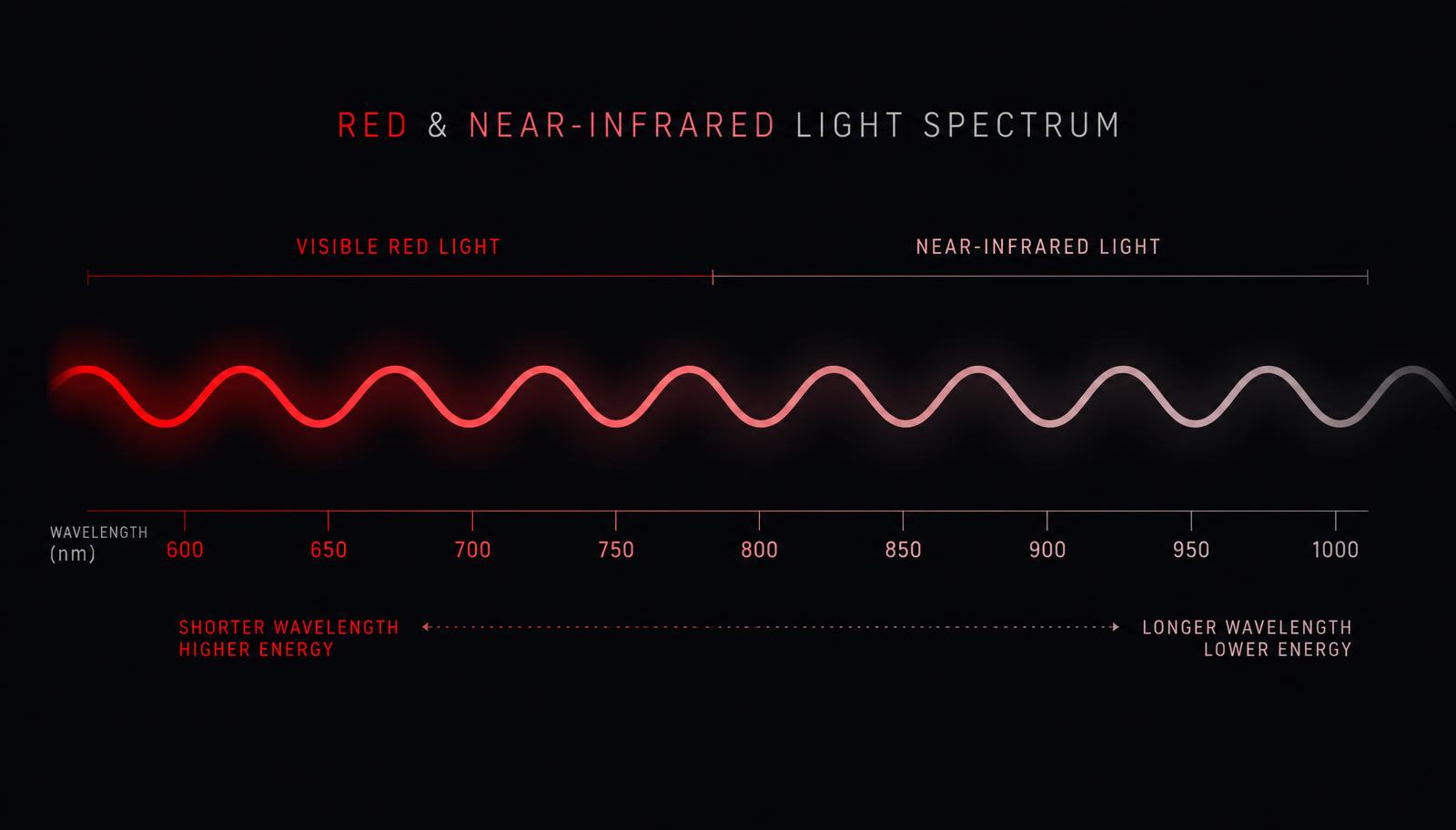
- Near-infrared at 810–850 nm penetrates deep enough to reach working muscle and joint capsules.
- Pre-conditioning 15–60 minutes before exercise may reduce subsequent damage markers.
- Post-exercise sessions target soreness, perceived fatigue and force restoration.
- Reported effects include lower creatine kinase and reduced DOMS versus placebo.
- Light complements sleep, protein and load management — it does not replace them.
Recovery is a metabolic problem
A hard session leaves behind microtrauma in the sarcomeres, depleted glycogen, accumulated metabolic byproducts and an inflammatory response tasked with cleaning up and rebuilding. That rebuild — satellite cell activation, myofibrillar protein synthesis, connective tissue remodelling — is expensive. Every step is paid for in ATP.
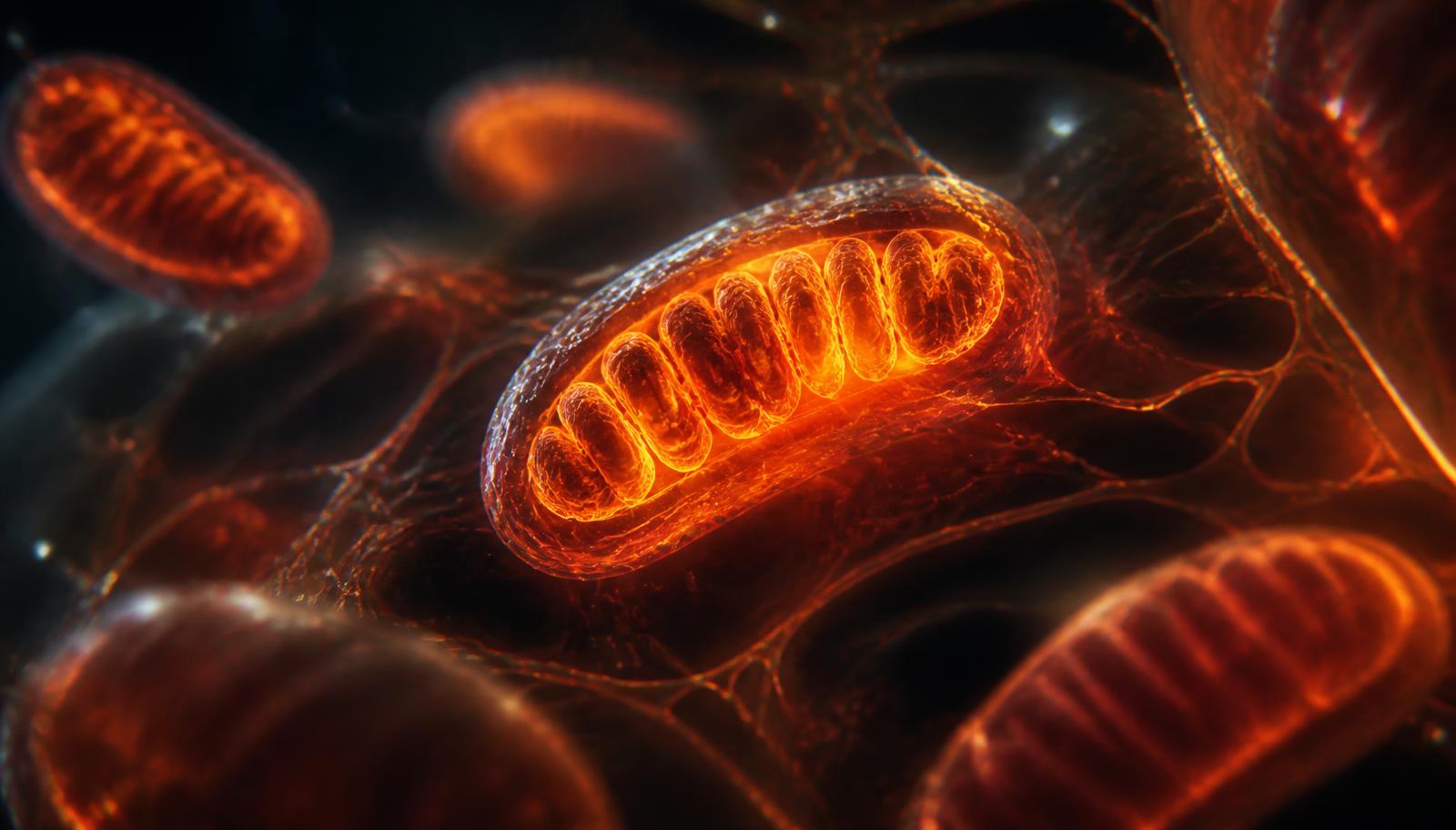
Which is why interventions that improve mitochondrial throughput are interesting to athletes. If cytochrome c oxidase is running closer to capacity and local perfusion improves, the repair machinery has both more energy and better logistics.
24–72 h
Typical DOMS window after unaccustomed load
810–850 nm
Depth-appropriate band for muscle tissue
10–15 min
Practical session length per muscle group
Pre-conditioning versus post-exercise
The literature splits into two strategies, and they are not interchangeable.
Pre-conditioning
Applying near-infrared light 15 to 60 minutes before training appears to prime tissue: mitochondria are already operating with a higher ceiling when load arrives, and antioxidant defences have been nudged upward by the earlier ROS signal. Trials in this design have reported lower post-exercise creatine kinase and lactate, and better maintenance of force output during repeated efforts.
Post-exercise recovery
Applying light after training targets the repair phase directly. Reported outcomes centre on reduced delayed-onset muscle soreness, lower perceived fatigue and faster restoration of peak torque in the 24 to 72 hour window.
| Timing | Primary aim | Best for |
|---|---|---|
| 15–60 min before | Prime mitochondria, reduce damage | Competition, key sessions, testing |
| Within 1 h after | Accelerate repair, reduce soreness | Heavy blocks, back-to-back days |
| Evening, any day | Systemic recovery and sleep | Chronic training load |
Joints, tendons and stubborn areas
Tendon and joint tissue is poorly vascularised, which is exactly why it heals slowly. Near-infrared light penetrates well enough to reach the capsule of superficial joints — knee, elbow, ankle, shoulder — and the local nitric oxide release improves perfusion in tissue that is chronically short of it.
- Treat the joint from two or three angles rather than one; coverage matters more than intensity.
- Longer, lower-intensity exposure suits deeper targets better than a brief blast.
- Combine with loading. Tendons remodel in response to mechanical stress; light supports the metabolic side of that adaptation.
- Track function, not just pain: range of motion, single-leg hop, morning stiffness duration.
Light will not fix a training plan that is too aggressive. It will help you survive one that is appropriately hard.
A practical weekly structure
- Key sessions: 10 minutes of near-infrared on the primary muscle groups, 30 minutes before warm-up.
- Hard sessions: 10–15 minutes on the worked area within an hour afterwards.
- Rest days: one 15-minute whole-body evening session for systemic recovery and sleep support.
- Niggles: 8–10 minutes on the specific joint, twice daily, for two to three weeks.
- Deload weeks: keep the light, reduce the load — this is when adaptation consolidates.
Do not out-light bad basics
Seven hours of sleep, adequate protein and sane load progression will always outweigh any device. Light is a multiplier on good habits, not a substitute for them.
Frequently asked questions
Should I use red light therapy before or after a workout?
Both work but for different reasons. Pre-conditioning 15 to 60 minutes before exercise has been associated with lower muscle damage markers and better force maintenance. Post-exercise sessions target soreness and repair. If you can only do one, use it before key sessions and after your heaviest ones.
Does red light therapy reduce muscle soreness?
Multiple controlled trials report reduced delayed-onset muscle soreness and lower creatine kinase levels compared with placebo light, particularly in the 24 to 72 hour window after unaccustomed load.
Which wavelength is best for muscle recovery?
Near-infrared between 810 and 850 nm penetrates deep enough to reach muscle and joint tissue. Combining it with visible red at 660 nm adds superficial coverage but the deep work is done by near-infrared.
Can red light therapy blunt training adaptations?
Unlike heavy post-exercise cold exposure, which can attenuate hypertrophy signalling, photobiomodulation has not been shown to blunt adaptation. Current evidence points towards supporting rather than suppressing the repair response.